Piano Recital and Conversation with Evgeny Kissin, piano genius and literary talent of our time; May 6, 2018 at 5 pm
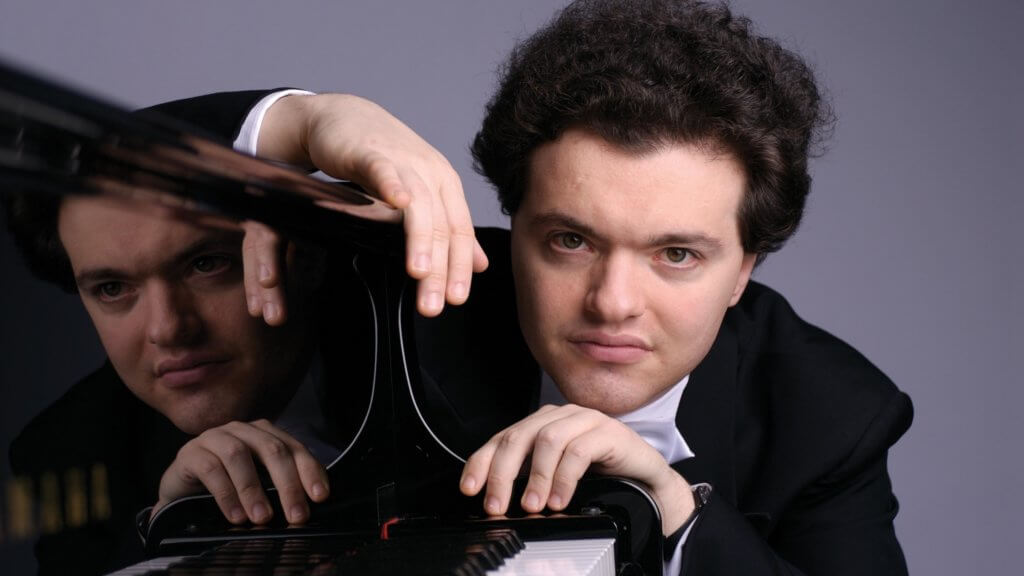
Evgeny Kissin; Photo Credit Sasha Gusov / Image courtesy of Russian Culture Center of NY
Evgeny Kissin is undoubtedly the most famous classical pianist of our time. No introduction is needed, just a mere mention of his name brings up the awe and veneration. After taking some time off from concert playing in 2017, he immersed himself in composing and writing which exposed a formidable talent and the depth of thoughts all the while not losing sight of his métier. The appearance at the intimate Florence Gould Hall on May 6 will give the public a chance to get close to both the music and the writings as well as to pose questions about inspirations and muses.
Kissin’s fame started early when in 1981 as a child prodigy at the age of 10 he played Mozart’s Concerto, his first public performance of serious music. That successful engagement led to his first solo recital at the Moscow Conservatory when he was still a student at Gnessin School of Music for musically gifted children. A star was born! The following year he made his first recording with Melodia label. In 1986 he started an international career first touring Japan, then in 1987 he appeared at the Berlin Music Festival. The year after with the Moscow Virtuosi orchestra and conductor Vladimir Spivakov he toured Europe and performed with the London Symphony orchestra in London. Later that same year he was introduced to maestro von Karajan who invited Kissin to perform in the New Year concert with the Berlin Philharmonic and to record with DG. Read More
Early works by Amedeo Modigliani on view from September 15, 2017 – February 4, 2018
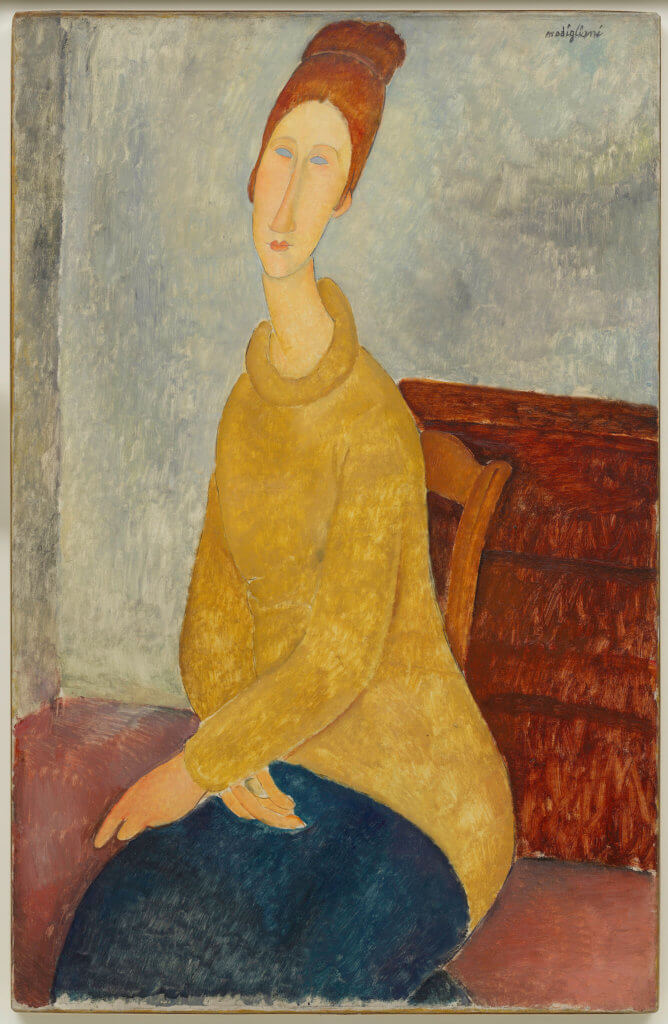
Jeanne Hébuterne with Yellow Sweater, 1918-19 / Image provided by Solomon R. Guggenheim Foundation / Art Resource NY
The drawings, paintings, and sculptures by Amedeo Modigliani are easily recognized for their characteristic elongated features and warm color palette. The Jewish Museum presents the works from Dr. Paul Alexandre collection who was the artist’s close friend and first patron. The show covers Modigliani’s first years in Paris from 1906 when he arrived on the scene till primarily 1912. While many of the works look very familiar, others are exhibited in New York for the first time refreshing the visitors understanding of the artist oeuvre and getting deeper into the roots of his creative style.
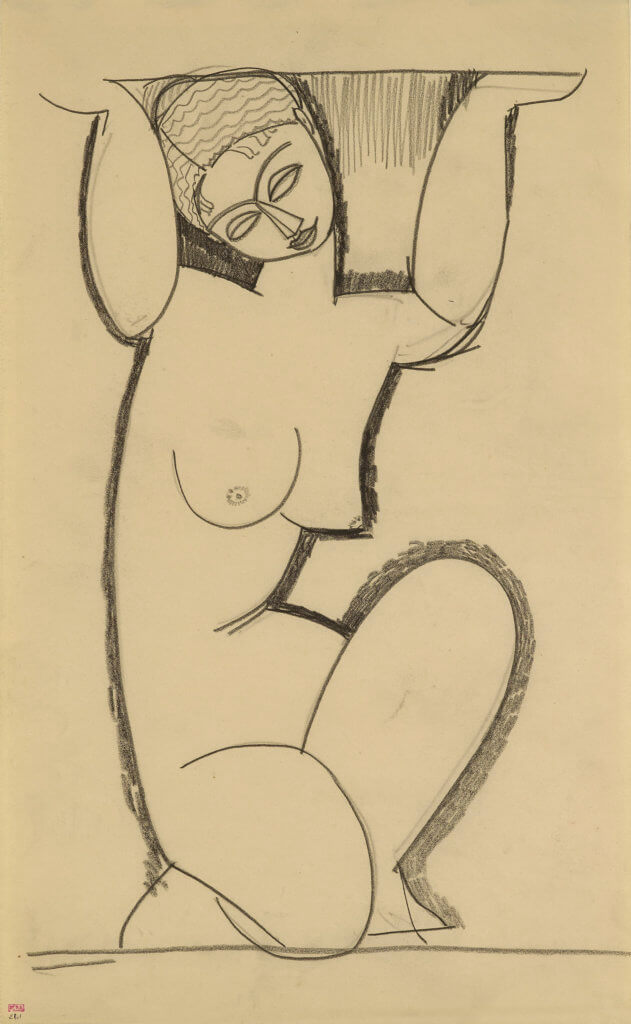
Kneeling Caryatid, 1911-12, Paul Alexandre Family, courtesy of Richard Nathanson, London / Image provided by Richard Nathanson, photo: Prudence Cuming Ass.
Amedeo Modigliani was born in a Sephardic Jewish family in Livorno, Italy in 1884. His father’s side came from Italian businessmen clan, while his mother’s side origins were from Marseille, France bringing a cultivated, intellectual ancestry which traced its lineage to Spinoza. The family’s fortunes collapsed at the time of Modigliani’s birth, but the family was able to maintain a flare of decent means because of his mother’s enthusiasm and resourcefulness. Modigliani had experienced multiple health crises in his childhood and youth leading eventually to tuberculosis that claimed his life at an early age of 35.
When Modigliani arrived in Paris at the turn of the twentieth century, it was an artistic hub and the center of creative expression counting in its ranks founders of every modernist artistic movement. The unprecedented vibrancy of creative scene was calling for finding new styles away from the classical determinism towards the freedom of abstract art. Modigliani, however, embraced figurative style likely because he had already experimented with Macchiaioli, en plain air painting technique which pre-dates impressionism, back in Florence, Italy when he was attending art school there. He didn’t fall in love with it and continued to work in his studio.
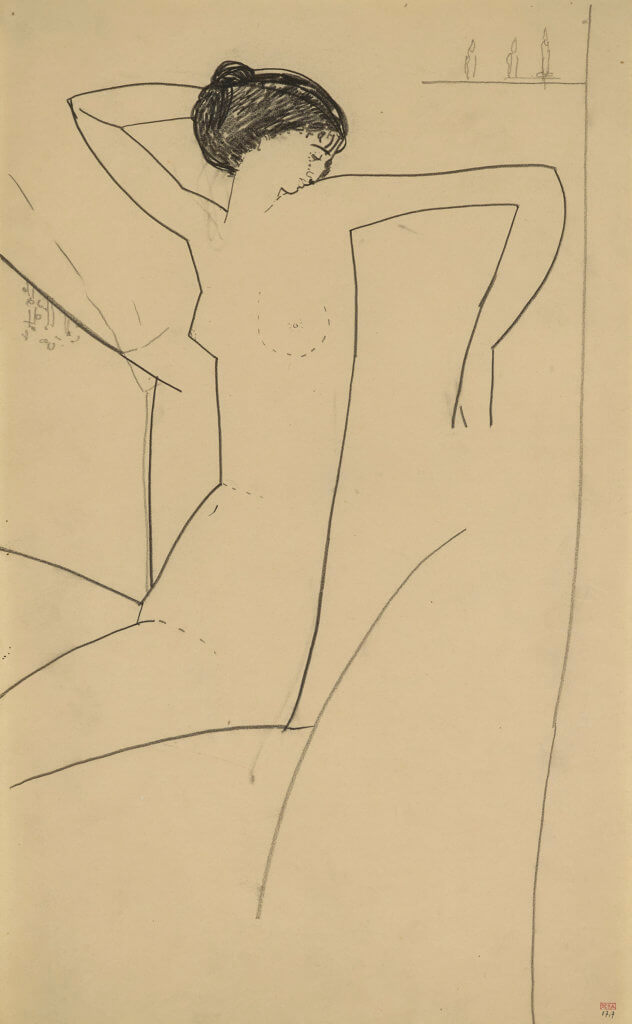
Seated Female Nude, possibly Anna Akhmatova, 1911; Paul Alexandre Family, courtesy of Richard Nathanson, London / photo: Prudence Cuming Ass.
In Paris he was getting his inspiration from African, Egyptian and Southeast Asian art that he intensively studied at the museums rich in exotic artifacts. The current show traces the influence of these ancient cultures on Modigliani’s works and emphasizes the successful mix of forms and poses found in his portraits.
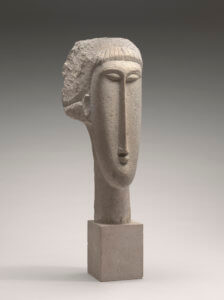
A fascination with the nonwestern representation of the faces and figures taken by the artist at the time when he met Russian poet Anna Akhmatova had resulted in numerous sketches of her as a goddess. The drawings on view have accentuated angular forms reminding of the paintings from the Ancient Egypt. Another gallery in the show is dedicated to the exploration of the caryatids and other devotional figures from the ancient world. Yet in another gallery, there is a collection of limestone sculpture heads reminiscent of the African masks. The build-up of influences and elements leads to the familiar oil paintings of nudes and portraits.
Modigliani’s short life was almost too full of all sorts of excesses. Too many lovers, too much alcohol and drugs, too many rushed ideas, too noisy parties. The latest biography by Meryle Secrest “Modigliani: A Life” tells a sympathetic story of this talented artist “putting his art at the center” in the words of the New Yorker review of the book.
One peculiar aspect of Modigliani’s oeuvre is that it attracts the imitators making Modigliani “the most faked artist in the world” according to Secrest. The seemingly easy to replicate compositions commanding sky-high prices combined with a poorly documented portfolio of works have led to the notorious number of forgeries. The fakes even found its way into acclaimed museum collections. An exhibition in Genoa, Italy in the summer of 2017 had to close early according to Artnet because of the high number of fakes on view.
Modigliani Unmasked will surely get one think about many of the artist’s intentions and make his art even more enjoyable for the viewers!
Amedeo Modigliani, Head of a Woman, 1910/1911, limestone, Chester Dale Collection
 well as to pose questions about inspirations and muses.
 well as to pose questions about inspirations and muses.