Art in NYC: The Colmar Treasure at the Met Cloisters

Art in NYC: The Colmar Treasure at the Met Cloisters

A Medieval Jewish Legacy, the Colmar Treasure exhibition highlights the tragedy of persecution by featuring the art and jewels hidden away around 1349 by a Jewish family from Colmar in Alsace (France)
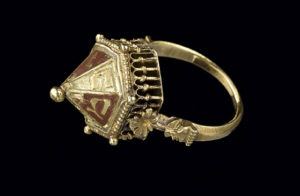
Jewish ceremonial wedding ring from the Colmar Treasure at the Met Cloisters
Jewish ceremonial wedding ring, from the Colmar Treasure, ca. 1300– before 1348. Musée de Cluny – Musée national du Moyen Âge, RMN-Grand Palais / Art Resource, NY

The Met Cloisters presents the precious objects of Colmar Treasure from Musee de Cluny in Paris alongside the Judaica from its collection and the private funds. The Cloisters are situated in a picturesque medieval castle surrounded by the lush greenery of Fort Tryon Park, which overlooks the sprawling Hudson River. The exhibition is curated by Barbara Drake Boehm, the Paul and Jill Ruddock Senior Curator, Department of Medieval Art and The Cloisters.

Colmar, a town in the modern-day Alsace region of France, was part of the Holy Roman Empire in the 14-century and traded hands between Germany and France up until World War I. A fast-growing and wealthy wine region, the town was a home for a thriving Jewish community that built a synagogue, a mikveh, and a school there.

The Colmar Treasure was accidentally discovered on Rue de Jiefs in 1863 during the construction of a confectionary shop. First kept in the private hands, in 1923 it was acquired by Musee de Cluny in Paris. While personal and small in its size, the stash of rings, coins, delicate silver belt, and appliqué, and the rest of the decorative objects discovered in Colmar presents a cautionary tale of hope, intolerance, tragedy, and societal betrayal in medieval Europe. The collection serves as a cautionary reminder of the past tragic mistakes driven by intolerance and mistrust.

Visit the exhibition, stroll the Cloisters, and admire the art that celebrates piety, devotion, sacrifice, and mercy. The Colmar Treasure occupies only one small hall of the museum but it tells a profound story. On view from July 22, 2019 – January 12, 2020.

Stay in the know about future events and offers by subscribing to ARTS-NY newsletter     


Read More

Art in NYC: Public Parks, Private Gardens at The Met Museum

Art in NYC: Public Parks, Private Gardens at The Met Museum

History and beauty of the parks and gardens from Paris to Provence through the famous artworks on view March 12 – July 29, 2018

NYC Met Museum Public Parks Private Gardens Paris Provence
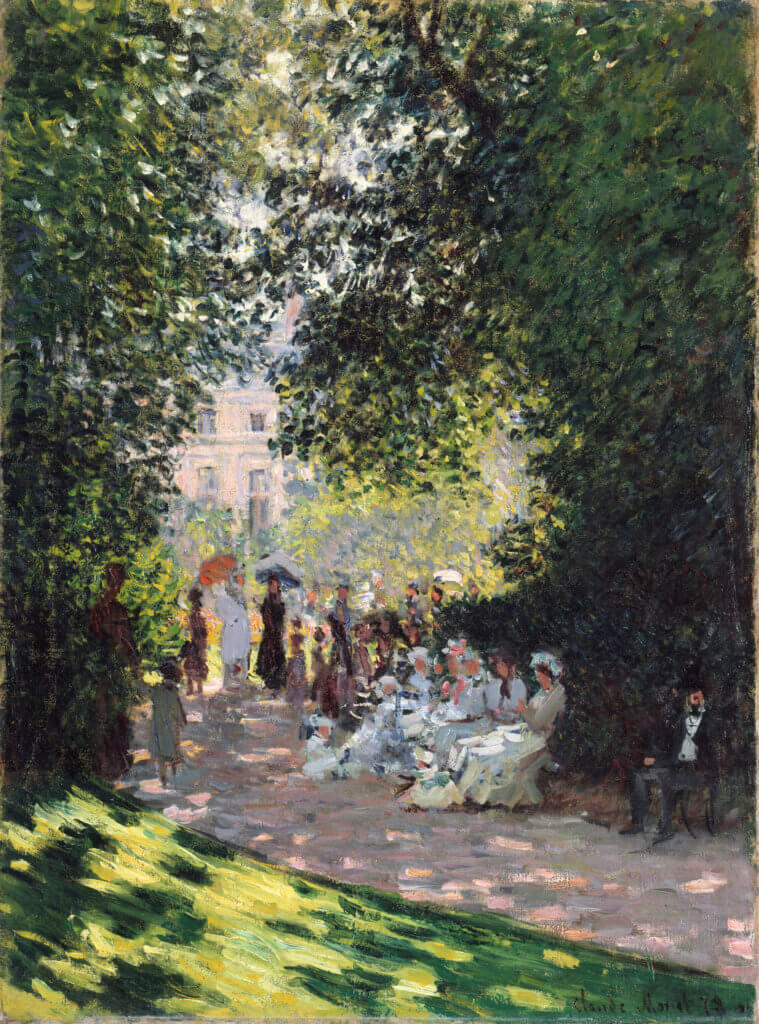
Claude Monet, The Parc Monceau, 1878 / Image courtesy of the Met Museum

Public Parks, Private Gardens exhibition at the Met is a perfect chance to see the magnificent green spaces of Paris through the eyes of the celebrated Impressionists from the Met Museum collection. And you don’t need to travel overseas to breeze the rest air of French parks! The Met brings the best of Paris to you.

The history behind the opening up of the parks and gardens to the public for its full enjoyment starts from the time of French revolution.  The idea that the beauty of nature has to be enjoyed by all not only by the privileged, had brought us the beloved public gardens of Paris and accelerated their expansion and general interest in horticulture and urban landscaping. Vive la Revolution for letting us escape the hustle and bustle of the city in the stately designed allees!

Impressionists and their en pain air painting movement preserved the lush greenery of the places in their celebrated works. Streaming sunlight, fresh and potent vegetation with relaxed figures strolling the grounds or sitting on the benches is how the parks are memorialized for us by Monet, Pissarro, Rousseau, Pissarro, and others. The names of the celebrated Paris gardens, Jardin des Tuileries, Le Jardin du Luxembourg, Le Parc Monceau sound like a love song to the eternal beauty of the city. See the show and enjoy a short imaginary walk in the best urban parks at the best time of year. It’s a timeless gift that will make even the gloomiest day full of excitement and hope. Don’t miss your stroll in that gentle sunlight! Read More

Art in NYC: Delirious Art at the Met Breuer

Art in NYC: Delirious Art at the Met Breuer

Delirious: Art at the Limits of Reason, 1950-1980 on view September 13, 2017 – January 14, 2018 

Metropolitan Museum exhibition Delirious Andy Warhol Yayoi Kusama
In-Out Anthropophagy by Anna Maria Maiolino, Super-8 film 1973 / Image Courtesy of the Met Museum

The expansive show of the post-WWII art at the Met Breuer under an ambitious title Delirious: Art at the Limit of Reason promises to spin your head. And it surely does! The exhibition includes the works of such luminaries of contemporary art as Andy Warhol, Yayoi Kusama, Eva Hesse, and Sol LeWitt among others. In all, about 100 pieces of art primarily from Europe, Latin America, and the US are organized under 4 loose categories: Vertigo, Excess, Nonsense, and Twisted. The visitors will encounter the generous labels about the subject and countersubject depicted in a particular work. This gentle guidance by the experts helps to appreciate fully the points made by the artists with all the twists and eccentricity entailed.

Metropolitan Museum exhibition Delirious Andy Warhol Yayoi Kusama
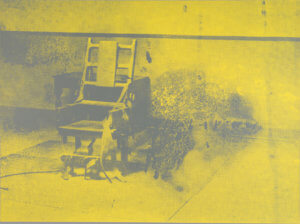
Electric Chair by Andy Warhol, Screenprint 1971 / Image courtesy of the Met Museum

The curatorial introduction to the show gives the meaning of the word delirious in its medical sense and points to the turbulence of the post-wartime as a leading factor that either caused or led to stimulating that state of mind. As science and technology were accelerating its hold on everyday life and encroaching on one’s perception of reality, they got their place in the contemporary art as seemingly endless repetitive sequences of shapes, colors, and sounds. In fact, in some sense, the most delirious effect of the exhibition is from its soundtrack.

A review by Roberta Smith in the New York Times notes that given the pressure of the Cold War and the uncertainties of the time the “artists answered life’s absurdities with more of the same”.

It is curious to note the fluidity between the rational use of certain technical and mathematical concepts and their irrational derivations cleverly observed by the artists. Some examples of those effects are topographical representations of Steiner Surfaces by Ruth Vollmer, Study of Distortion by Agnes Denes, or Color Motion 4-64 by Edna Andrade. In other cases seemingly simple everyday actions are transformed by endless repetition to stunning visual and sound effects in Cycles of 3s and 7s by Tony Conrad and several works by Sol LeWitt.

Metropolitan Museum exhibition Delirious Andy Warhol Yayoi Kusama
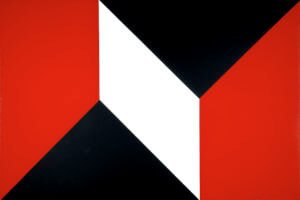
Snap Roll by Dean Fleming, Acrylic on canvas 1965 / Image courtesy of the Met Museum

Another interesting aspect of the show is its focus on the influence of the writings by Samuel Beckett on the artists. It’s not a coincidence as the show had preceded by 5 years of research into the perception of Beckett’s plays by the experimental artists. The exhibition also highlights a connection between the artistic expression and the social and political environment of the moment.

While it may feel by some that the exhibition skipped some of the work that could clearly belong there, it helps to keep in mind how productive the sphere of art was in the post-war time. This carefully selected sample of works is only scratching the surface of the oeuvre in the category feeding the appetite to see more.

Metropolitan Museum exhibition Delirious Andy Warhol Yayoi Kusama
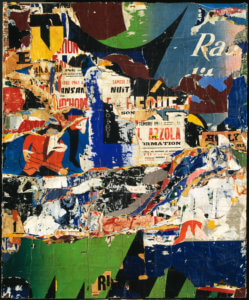
Jazzmen by Jacques Mahé de la Villeglé,Torn posters mounted on canvas,1961 / Image courtesy of the Met Museum

With the New York Pass your can enjoy a free visit to the Met Breuer!

Planning a trip to NYC?


Venue: The Met Breuer, 945 Madison Avenue, NY

Dates: September 13, 2017 – January 14, 2018


Art in NYC: Leonardo to Matisse Drawings at the Met Museum

Art in NYC: Leonardo to Matisse Drawings at the Met Museum

Master Drawings from the Robert Lehman Collection

Leonardo to Matisse Met Museum master drawings Robert Lehman collection
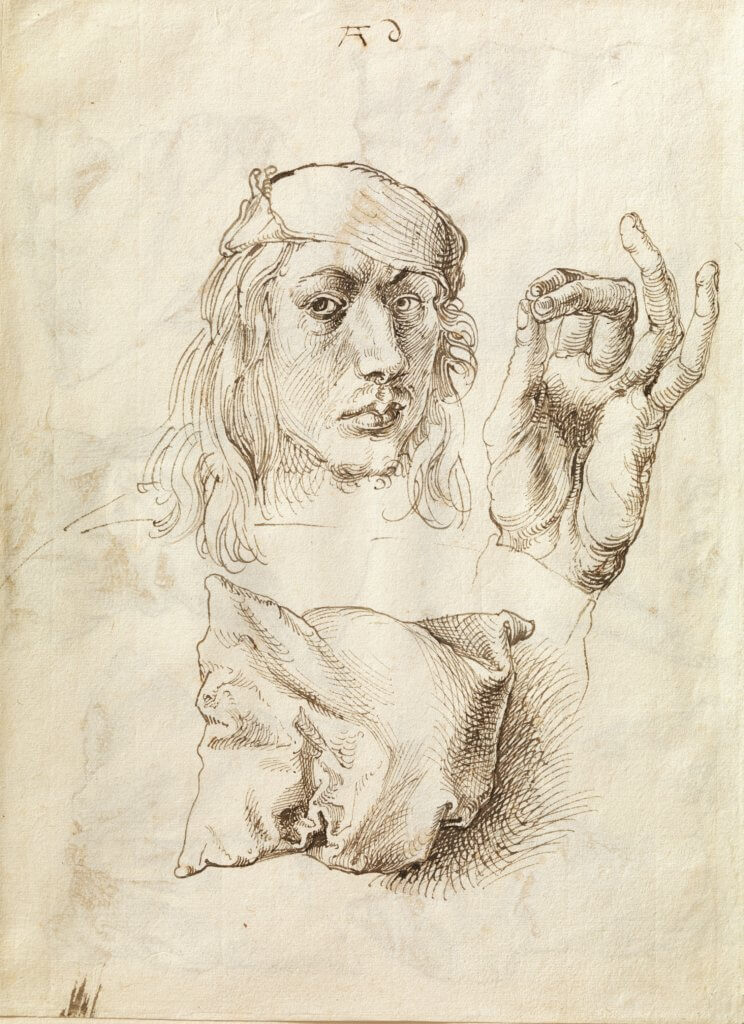
Albrecht Dürer,
Self-portrait, Study of a Hand and a Pillow (recto),1493 / Image courtesy of the Met Museum

Intimate and insightful survey of European drawings from the Renaissance to Early Modernism is on view at the Met Museum on October 4, 2017 – January 7, 2018. The works are selected from the collection of Robert Lehman who spent six decades on building his fast art assemblage with 700 sheets of drawings complementing his father’s collection of paintings.  Leonardo to Matisse show comprises of 4 sections dedicated to Italian Renaissance, Dutch and German drawings from 15th to 17th centuries, the 18th and 19th century works from Italy and France, and ending with Impressionists and Early Modernists.

The exhibition is organized in the chronological progression mirroring the establishment of the medium as a fully developed form of creative expression. It begins with the pieces by Italian Renaissance masters covering the time when the medium of drawing was starting to claim its rights. From sketches and quick studies of compositions and gestures, it had progressed to the finished works prized by patrons and collectors. Giorgio Vasari, a painter, and art-historian who defined our appreciation of the drawing and its foundational place in art was among the first collectors. One of the pieces from his collection by Antonio Pollaiuolo is on view now at the Met. Vasari’s book “Live of the Most Eminent Painters, Sculptors and Architects” first time published in 1550 is still a great source for art-historians and history buffs. Vasari dedicated his book to Grand Duke Cosimo I De’Medici. Medici’s patronage of the arts helped to speed up the Renaissance.

Leonardo to Matisse Met Museum master drawings Robert Lehman collection
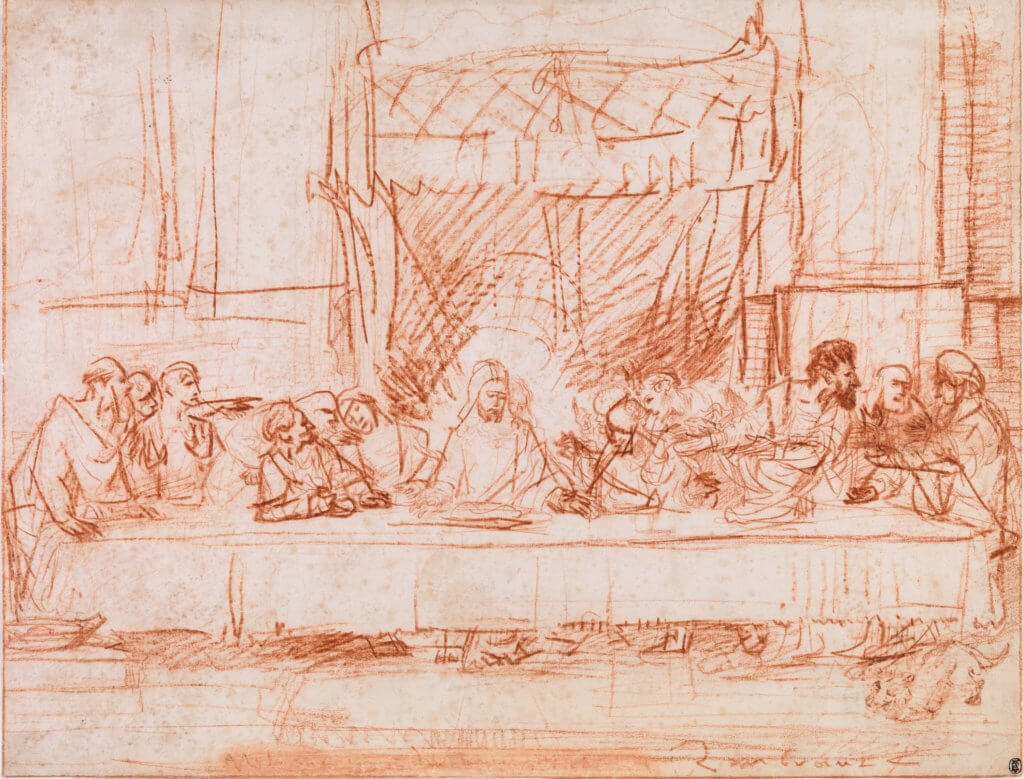
Rembrandt, The Last Supper, after Leonardo da Vinci, 1634–35 / Image courtesy of the Met Museum

An extremely detailed sketch of a bear by Leonardo is an example of the artist’s keen technique and close observation of the world around him. Leonardo kept copious notebooks full of sketches and momentous studies as well as in-depth engineering designs and scientific research. The New Yorker preview of the recently published biography “Leonardo Da Vinci” by W. Isaacson notes a point made by Isaacson about Leonardo’s tendency to rush and abandon his projects. The medium of drawing with its fast pace seems to be an ideal one for someone endlessly on the creative move.

The next section in the exhibition is dedicated to the Northern Europeans from 15th through 17th centuries. From delicate portraits to scenes from everyday life, the works on view are by Jan van Eyck and his circle, Rogier van der Weyden and his workshop with an allegorical scene used as a prep for sculptural work, and a fascinating study by Rembrandt of Leonardo’s Last Supper done in red chalk. German masters are represented by amazing pieces including a self-portrait and highly textured sketches of household items, in this case, pillows by Albrecht Durer.

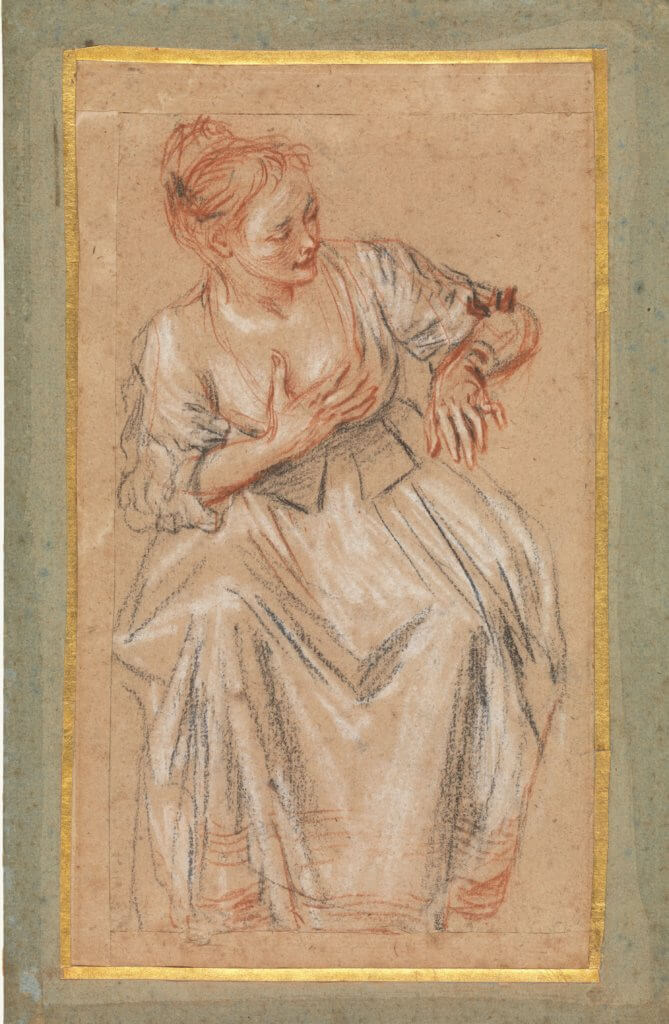
Moving to 18th and 19th century Italian and French works, the show presents fine examples of new highs in using pen, ink, wash and other material to convey the story and emotions. Works by Tiepolo, Giambattista, Goya, Corot, Watteau and Fragonard introduce new techniques and highly refined skills.

Leonardo to Matisse Met Museum master drawings Robert Lehman collection
Antoine Watteau, Seated Woman, 1716–17 / Image courtesy of the Met Museum

The last section is dedicated to the Impressionists and Modernists ranging from Degas to Seurat to Matisse. The drawings on view give a window into artists’ minds letting us see how they developed the subjects of the future paintings. All alone the drawings are taking a deserved place as a form of art with all its power and thought-provoking allure.

The exhibition will delight every art lover!

For museum hours and more click here.

Enjoy your free visit to the Met museum with NewYorkPass!


Venue: The Met Museum on Fifth Avenue       

Time: October 4, 2017 – January 7, 2018