Monumental Met Opera production of a timeless masterpiece by Verdi with star-studded cast returns to the Met Opera stage in January, 2019
A scene from Verdi’s Aida at MetOpera; Photo: Marty Sohl / Met Opera
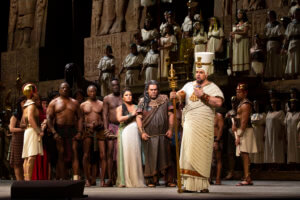
Grand Opera in its ultimate sense, Verdi’s Aida in Sonja Frisell’s production from 1988 is a highlight of the 2018-2019 Metropolitan Opera season. The grandeur of the staging calls for an equally magnificent cast. In the winter and early spring a talented duo of Sondra Radvanovsky in the title role and Dolora Zajick as Amneris with Aleksandr Antonenko and Yonghoon Lee alternating as Radomes will take the stage.
The stage design by Gianni Quaranta recreates the pompous style of the Old Kingdom architecture in all its sumptuousness. The director Stephen Pickover is matching the decor with hundreds of performers including four horses, two brass choirs, ballet dancers and supernumeraries trooping the stage. It all aims to convey the might and power of Egypt’s Pharaoh. And it surely fulfills the intent. That state omnipotence is skillfully contrasted against the lonely and touching scenes of soul-searching and love despair. This is the theater in all its might with its tricks finely brought together for the joy of the opera fans. Get tickets at 21% off with TodayTIX.
Vibrant production by Sir David McVicar of the beloved Verdi’s opera on January 22 – February 15, 2018
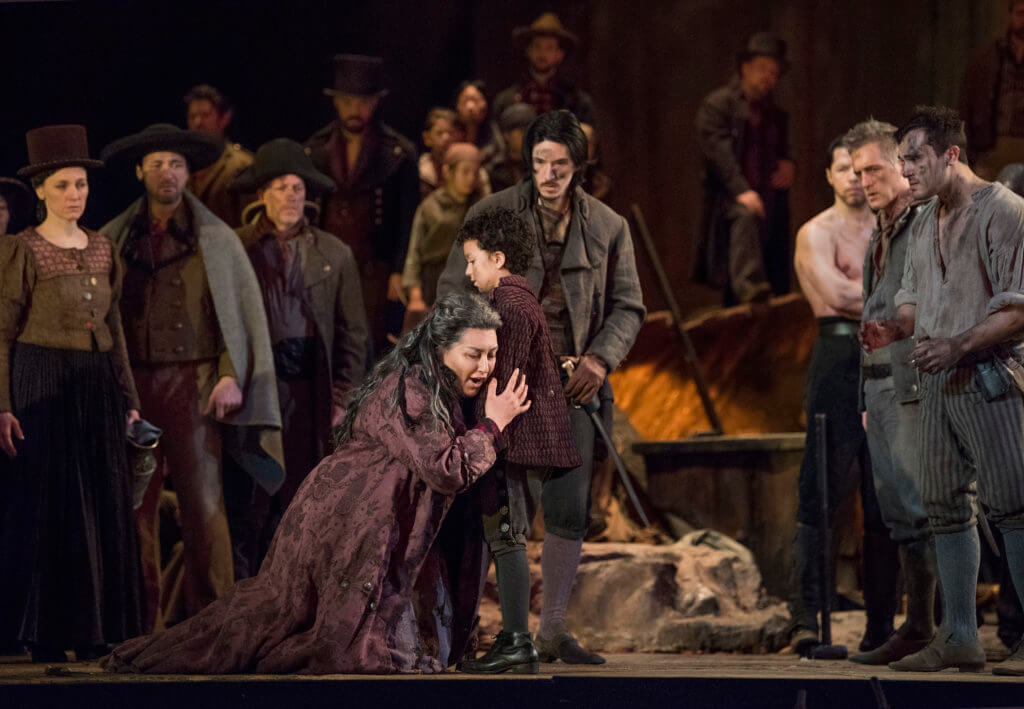
Anita Rachvelishvili as Azucena in Il Trovatore/ Image courtesy of the Met Opera NYC
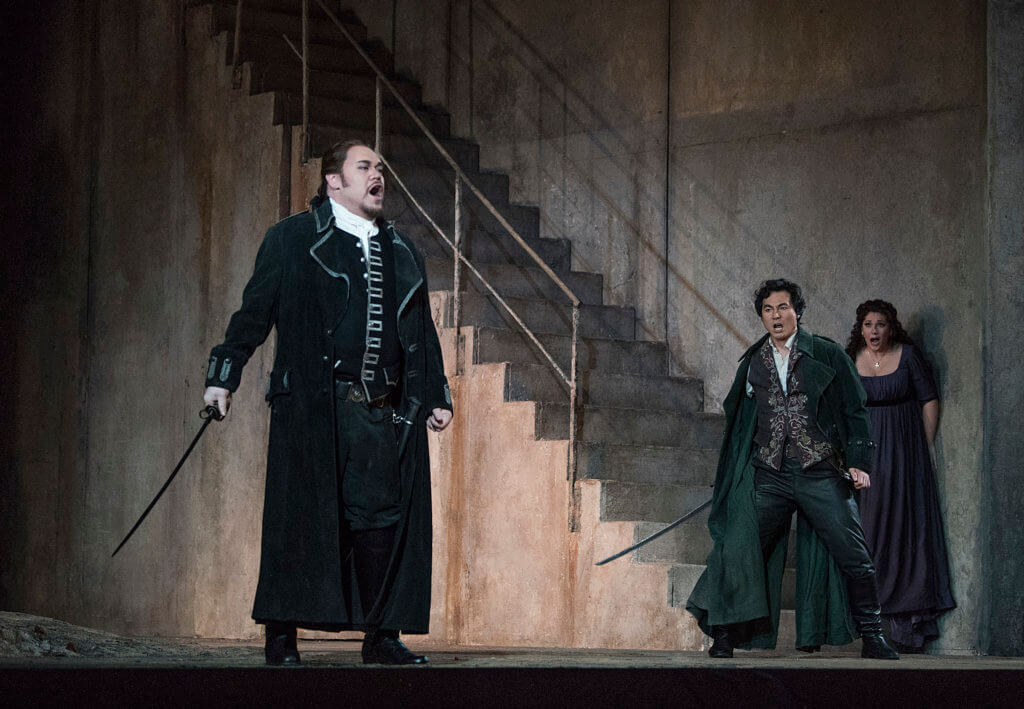
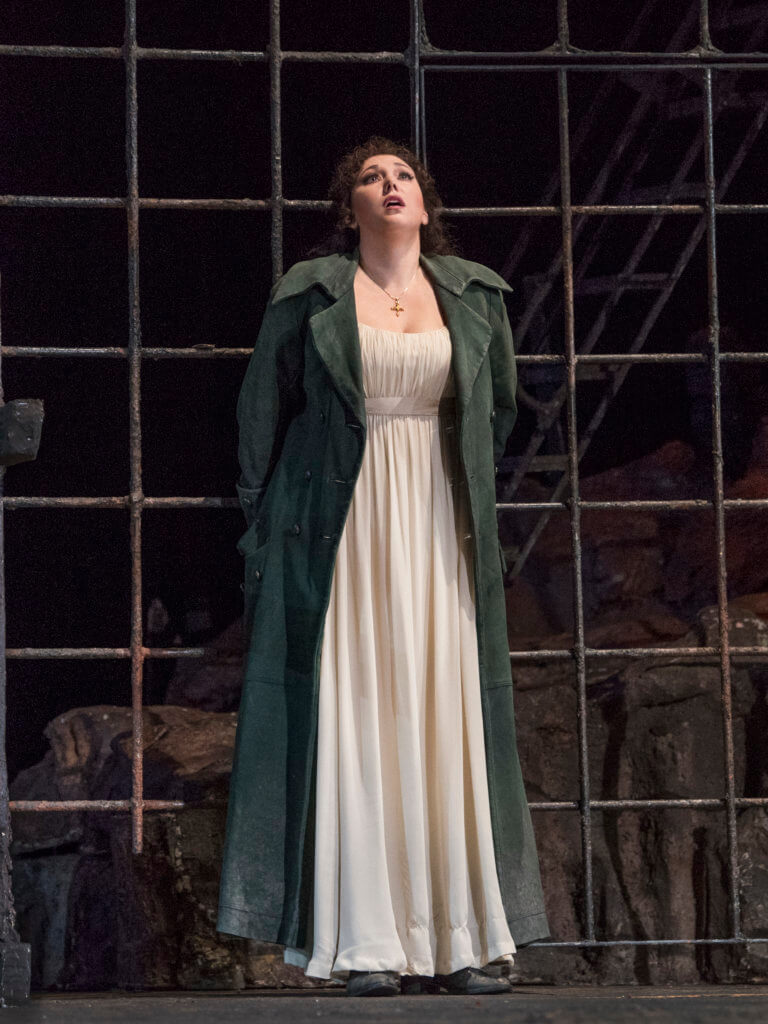
This year repertoire at the Met Operais clearly dominated by Sir David McVicar’s productions. Il Trovatore, which first had opened here in 2009, is returning to the Met stage with a formidable cast under the baton of Marco Armiliato. The title role in this production is forcefully performed by Yonghoon Lee, the role of his lover Leonora is sung by Jennifer Rowley and the role of Count Di Luna is performed by the baritones Quinn Kelsey and Luca Salsi. After the opening on Monday, January 22, the praising reviews were given to the magnificent Georgian mezzo-soprano Anita Rachvelishvili performing the most complicated part of the opera, a gypsy Azucena. Book your tickets here.
Jennifer Rowley as Leonora in Il Trovatore / Image courtesy of the Met Opera NYC
Il Trovatore’s catchy, disturbing and at the same time melodic music score is overplayed on a macabre plot of medieval rivalries, superstitions and love stories. It is based on a successful play El Trovador (1836) by Antonio García Gutierrez. Verdi had started the work on this opera sometime in 1850 first with the librettist Salvadore Cammarano and later after Cammarano’s death in 1852 with young poet Leone Emanuele Barware. In his correspondence with Cammarano Verdi kept asking him for packing more actions in the libretto to make the most effect on the public. The librettists seem to succeed in that regard. Notwithstanding opera’s great acclaim by the audiences around Europe, the plot was mocked in numerous satires in Italy and elsewhere, which in itself was a sign that its a hit. The twists and turns of the original tale are transformed in this production from the very distant beginning of 15th century Aragon, Spain to the time of the Spanish War of Independence (1807-1814) fought against Napoleonic France. The bitterness and horrors of that period are memorialized in Goya’s “Desastres de la Guerre.”
The creators of this production felt that the time of Peninsular War “fits with Verdi’s tinta, the dark palette he creates for Spain” as McVicar pointed out in an interview with the New York Times. However, some critical elements of the plot in Il Trovatore particularly those surrounding Azucena and her fate seem to be mooted for early 1800. While in the gypsy folk tradition the fire is believed to be the means of communication with the dead, it makes sense for gypsy Azucena’s story and its horrific prominence in the original play set in the 15th century as burnings of sorceresses at the stake were widely practiced. At the time of Napoleon, the use of that practice is highly questionable.
Quinn Kelsey as Count Di Luna, Yonghoon Lee as Manrico, Jennifer Rowley as Leonora in Il Trovatore / Image courtesy of the Met Opera NYC
Despite the pitfalls of historic transposition, Anita Rachvelishvili as Azucena is taking a center stage with her dramatic performance. It’s one thing for Azucena to sing “It makes my blood run cold”, and its very different when the delivery of the lines makes the listeners’ blood cold. “Well, it fairly freezes in your veins while watching and listening to Anita Rachvelishvili” observes Z. Wolf in his New York Times review. Rachvelishvili powerful stage presence masterfully switching from the chilling scenes of tormenting madness to the touching desperation is particularly important here. Verdi himself was thinking about Azucena as a main female character in this opera and even wanted her name to be in the title. The Met orchestra under Armiliato conducting provides superb and inspiring music. With the rest of the main cast being well-placed, the production delivers a deep and spirited theatrical impression.
Starting from 1853 when it was first performed at the Teatro Apollo in Rome, Il Trovatore entered the repertoire of every major opera house in the world. There is a rich and diverse discography with multiple variations of the best singers and conductors. Its catchy melodies had even entered the popular culture and were used in the movie and TV productions.



 succeed in that regard. Notwithstanding opera’s great acclaim by the audiences around Europe, the plot was mocked in numerous satires in Italy and elsewhere, which in itself was a sign that its a hit. The twists and turns of the original tale are transformed in this production from the very distant beginning of 15th century Aragon, Spain to the time of the Spanish War of Independence (1807-1814) fought against Napoleonic France. The bitterness and horrors of that period are memorialized in Goya’s “Desastres de la Guerre.”